
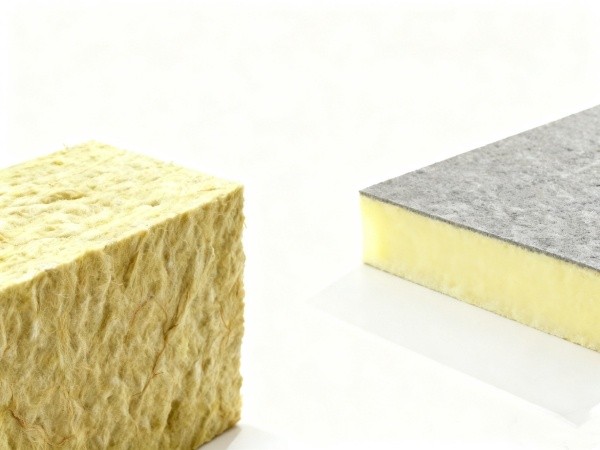
Thermal insulation serves as a protective barrier that minimizes heat transfer between environments with differing temperatures. However, the purpose and performance requirements vary significantly between hot insulation and cold insulation systems.
Hot insulation is applied to equipment and piping systems operating at temperatures above ambient conditions — such as boilers, steam lines, or furnaces — to prevent heat loss, protect personnel, and improve energy efficiency. In contrast, cold insulation is used on systems that operate below ambient temperature, including refrigeration pipelines, chilled water systems, and cryogenic equipment. Its primary function is to prevent heat gain, control condensation, and avoid corrosion under insulation (CUI).
Although both systems aim to maintain temperature stability, the direction of heat flow, material selection, and installation technique differ greatly.
The core differences between hot and cold insulation materials lie in their operating temperature ranges, moisture resistance, and mechanical design.
Hot insulation materials, such as calcium silicate, mineral wool, or ceramic fiber, are chosen for their ability to withstand high temperatures and thermal shocks. Their main goal is to retain heat within the system and protect nearby surfaces from excessive heat exposure. These materials usually do not require vapor barriers because condensation is not a concern at high operating temperatures.
Cold insulation materials, on the other hand, work under entirely different conditions. They must block external heat from penetrating the system while also preventing moisture intrusion that can lead to icing, corrosion, or system inefficiency. Typical materials include polyisocyanurate (PIR), polyurethane (PU), elastomeric foams (NBR, EPDM), phenolic foam, and cellular glass.
Another critical difference is the multi-layer system design. Cold insulation often involves a vapor barrier, adhesive sealing, and weatherproof cladding to ensure airtight protection. Any small gap or improper sealing can compromise the system's performance, making cold insulation more technically demanding than hot insulation.
Cold insulation design must address two major challenges: moisture control and condensation prevention.
When surfaces are below the dew point temperature, condensation naturally forms — and without proper insulation, this can lead to ice formation, energy loss, and corrosion under insulation.
To prevent this, cold insulation systems integrate vapor barriers and moisture-resistant materials. High-closed-cell foams such as PIR or NBR are preferred because they limit water absorption while maintaining stable thermal conductivity at low temperatures. The entire system must be fully sealed, including joints, fittings, and supports.
Additionally, mechanical strength and dimensional stability are essential, especially in cryogenic applications like LNG tanks or liquid nitrogen pipelines, where materials are exposed to extremely low temperatures. Poor design can lead to cracking, delamination, or insulation failure, resulting in significant maintenance costs.
Cold insulation plays a vital role across multiple sectors:
Refrigeration & HVAC systems – Ensures temperature control, prevents condensation on chilled water lines, and enhances energy efficiency.
Food and beverage processing – Maintains product quality by controlling temperature during storage and transportation.
Pharmaceutical industry – Protects temperature-sensitive materials and maintains controlled environments.
LNG, petrochemical, and cryogenic storage – Provides safety, stability, and long-term performance under extreme low temperatures.
In commercial settings, properly designed cold insulation not only improves system performance but also reduces energy consumption and operational costs. The importance of moisture control and insulation integrity cannot be overstated, as even minor leaks can compromise system reliability.
When it comes to cold insulation, precision and reliability are non-negotiable. Zhenshen specializes in advanced cold insulation materials and systems designed for industrial and commercial use. With years of expertise, the company delivers comprehensive solutions that address the challenges of thermal efficiency, condensation prevention, and long-term durability.
Zhenshen's product range includes high-performance PIR insulation materials, along with integrated system components for seamless installation. Each product is tested for thermal stability, moisture resistance, and mechanical strength, ensuring consistent performance under demanding conditions.
By partnering with Zhenshen, businesses gain access to professional technical support, tailored insulation design, and dependable materials that safeguard their operations from energy loss and system failure. Feel free to contact us!

Copyright ? 2025ZHEJIANG ZHENSHEN INSULATION TECHNOLOGY CORP.LTD. All rights reserved. 網(wǎng)站備案/許可證號:浙ICP備16010266號-1